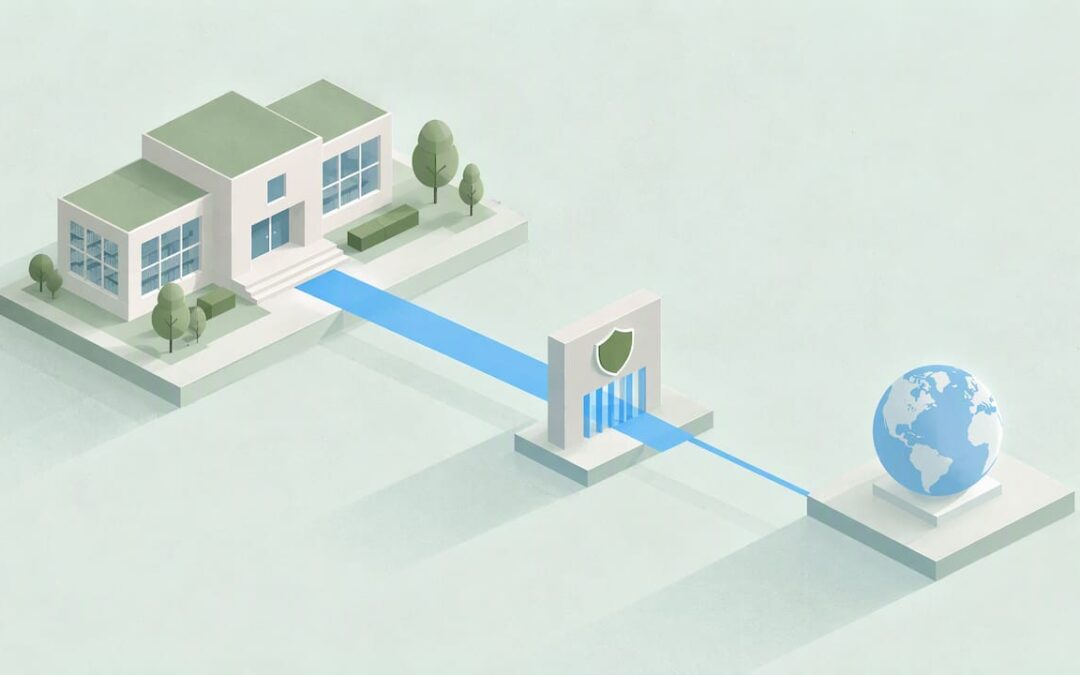
CIPA compliance means meeting the requirements of the Children’s Internet Protection Act, the federal law that ties E-Rate discounts to internet safety. If your school or library receives E-Rate discounts for internet access or internal connections, you must adopt and enforce an internet safety policy, use a technology protection measure (a filter) and certify that you have done so. Schools have an added duty: monitoring minors’ online activity and teaching appropriate online behavior. This guide explains each requirement, the paperwork behind it and the consequences of missing it.
TL;DR
- CIPA is a federal law enacted in 2000. It applies to schools and libraries that receive E-Rate discounts for internet access or internal connections.
- You must certify an internet safety policy and a technology protection measure that blocks obscene images, child pornography and images harmful to minors.
- Schools must also monitor minors’ online activities and educate students about appropriate online behavior, including cyberbullying awareness.
- Knowingly failing to submit the required certifications makes an applicant ineligible for E-Rate discounts until they are filed.
- Compliance is ongoing: the policy, the filter and the training all have to be in place and enforced, not just written down.
Table of Contents
- What CIPA is and why it exists
- Who must comply
- The three core requirements
- What you certify, and when
- What happens if you are not compliant
- Perspective: why we treat CIPA as a funding safeguard
- Common gaps we would check first
- Where CIPA may be heading
- CIPA, E-Rate and the rest of your compliance file
- How we help with CIPA compliance
- FAQ
- Sources
What CIPA is and why it exists
Congress enacted the Children’s Internet Protection Act in 2000 to address concerns about children’s access to obscene or harmful content on the internet. The law does not regulate every school or library. It works through funding: it attaches conditions to schools and libraries that receive E-Rate discounts for internet access or internal connections.
That design matters for how you think about compliance. CIPA is not a one-time technology purchase. It is a set of commitments you make when you ask for E-Rate funding, and you repeat those commitments each time you seek support. If you are not applying for E-Rate discounts on those services, CIPA’s funding conditions are not the rules you are answering to, though state law and local policy may still apply.
Who must comply
CIPA covers K-12 schools, school districts and libraries that receive E-Rate support for internet access or internal connections. Applicants such as consortia and educational service agencies take on the same obligations when they apply on behalf of member schools and libraries, so the certifications need to reflect what each member actually does.
Two definitions drive the details:
- Minor. CIPA defines a minor as any individual under the age of 17. A high school senior who has turned 17 falls outside the definition, which affects how you describe filtering to staff and students.
- Technology protection measure. This is the filtering or blocking tool that you certify is in place on your network.
If you are unsure whether a particular service triggers CIPA, check how it is classified in your E-Rate application before you assume it does not.
The three core requirements
CIPA breaks down into three parts. Libraries must meet the first two. Schools must meet all three.
| Requirement | Schools | Libraries |
|---|---|---|
| Internet safety policy | Yes | Yes |
| Technology protection measure (filtering) | Yes | Yes |
| Monitoring minors’ online activity | Yes | Not part of the requirement |
| Educating minors about appropriate online behavior | Yes | Not part of the requirement |
The FCC’s consumer guide summarizes the structure: applicants certify an internet safety policy with a measure that blocks or filters obscene images, child pornography and images harmful to minors on computers that minors access. Schools must also monitor minors’ online activities and provide education about appropriate online behavior.
1. A technology protection measure
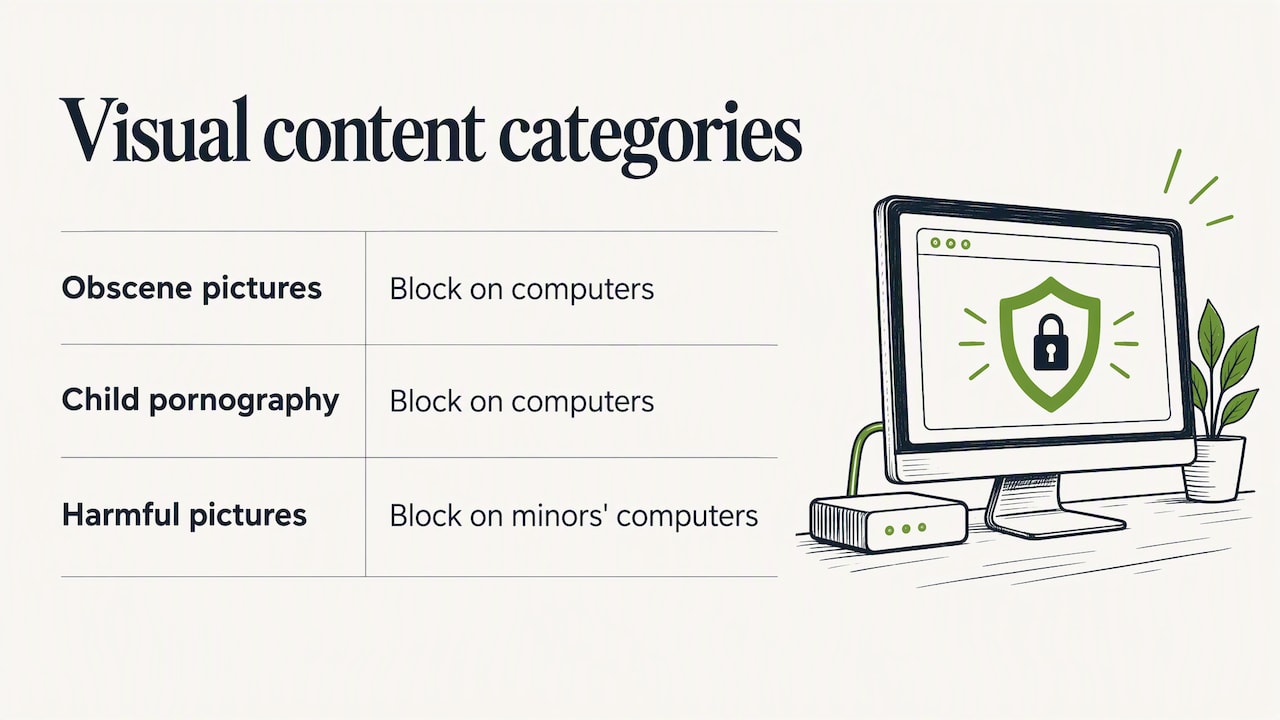
The filter must block three categories of visual content: pictures that are obscene, pictures that are child pornography, and, for computers minors use, pictures that are harmful to minors. Notice what the rule says and does not say. It is about visual depictions, and it is tied to your certification that the measure is in place and enforced.
The American Library Association notes that because blocking software has inherent flaws, libraries are treated as compliant when they make a good faith effort to block the required categories. The same ALA FAQ clarifies that the Supreme Court’s decision on CIPA did not change the filtering requirements for schools.
The rule also allows an authorized person to disable the measure for adults for bona fide research or other lawful purposes. The wording is in 47 CFR 54.520, so read it before you write your own disabling procedure.
2. An internet safety policy
The policy is where most applicants slip, because it has to cover specific topics. According to the FCC, your policy must address:
- minors’ access to inappropriate matter on the internet;
- the safety and security of minors when using email, chat rooms and other forms of direct electronic communication;
- hacking and other unlawful online activity by minors;
- unauthorized disclosure, use and dissemination of minors’ personal information;
- measures that restrict minors’ access to materials harmful to them.
The FCC guide lists these elements. A generic acceptable use policy often covers two or three of them. Check yours against all five.
The rule also requires that you provide reasonable public notice and hold at least one public hearing or meeting to address the policy, as set out in 47 CFR 54.520. Keep the notice and the meeting record with the policy.
3. Monitoring and education (schools only)
Schools must provide for monitoring the online activities of minors. Since July 1, 2012, schools must also provide for educating minors about appropriate online behavior. That includes:
- interacting with other people on social networking sites and in chat rooms;
- cyberbullying awareness and response.
The education component is the one auditors can only verify through documentation. A policy that says students will be taught is weaker than a record showing what was taught, to which grades and when.
What you certify, and when
Certification is the moment compliance becomes a funding issue. Under 47 CFR 54.520, organizations must certify CIPA compliance before receiving E-Rate funding. The certification is a statement that the policy has been adopted and is being enforced, and that the technology protection measure is operating. USAC’s CIPA page is the program administrator’s reference for how it applies to applicants.
A practical way to think about it:
- Before you apply: confirm the policy exists, was adopted after public notice and a hearing, and covers every required topic.
- Before services start: confirm the filter is live on every network segment and device type that minors use.
- Throughout the funding year: enforce the policy, monitor, run the education program and keep records.
- Each new funding year: review the policy and filter, then certify again.
For newer applicants, the order of operations is the common trap. Certifying on the strength of a filter that is not yet deployed, or a policy still in draft, is the kind of mistake that creates problems later in a review.
What happens if you are not compliant
The consequence is financial and direct. A school or library that knowingly fails to submit the required certifications is ineligible for E-Rate discounts until those certifications are submitted. In practical terms, noncompliance puts your funding for internet access and other services that require CIPA compliance at risk.
For a district budgeting around E-Rate discounts, that risk is the real cost of getting CIPA wrong. A missed policy element can turn into a reimbursement problem long after the services were delivered.
Perspective: why we treat CIPA as a funding safeguard
Most of the CIPA problems we see are not about filters. They are about paper and timing. A district has a capable filter and a decent policy, but the policy was adopted years ago, nobody can find the public notice, and the student education piece lives in one teacher’s lesson plan.
We manage the E-Rate process end to end, so we see CIPA at the point where it matters: the certification that sits next to a funding request. Our approach is to treat the policy review, staff training and documentation as part of the same workflow as the application, with deadlines tracked well ahead of time and records kept in a dedicated support portal so you can produce them when asked.
If you are a technology director or a business official, you should not have to become a regulatory specialist to protect your discounts. Have someone who handles these filings every year check your CIPA file before the next funding year starts, not after a question arrives.
Scott
Common gaps we would check first
Whether you handle CIPA in house or with an advisor, run this checklist against your file.
- Policy covers all five required topics. Compare the text line by line with the FCC list above.
- Public notice and hearing are documented. Keep the dated notice and the meeting minutes.
- Filter covers every network and device. Individually assigned devices that go home or connect off campus are the usual blind spot. The Congressional Research Service reports that the FCC has questioned whether current CIPA requirements are adequate given the shift from shared computer labs to individually assigned devices.
- Education is delivered and recorded. Include cyberbullying awareness, social networking and chat room behavior, and digital citizenship, with dates and grade levels.
- Monitoring is defined. Say who monitors, how and what happens when something is flagged.
- Disabling procedure is written. Name who may disable the filter for adults and for what purpose.
- Policy is reviewed annually. Date every review.
Where CIPA may be heading
CIPA has not changed much in structure, but the debate around it is active. The Congressional Research Service observes that although social media is not categorically blocked under CIPA, there is ongoing debate over whether the FCC should require such blocks. It also notes the FCC has signaled potential future regulatory reviews.
For your planning, that means treating your policy as a living document. If your filtering and education approach already addresses social media and off-campus devices, a rule change becomes a documentation update rather than a scramble. Our E-Rate updates track program changes as they are announced, and the August 2026 industry update covers the FCC review and competitive bidding changes.
CIPA, E-Rate and the rest of your compliance file
CIPA does not sit alone. It is one of several conditions attached to E-Rate funding, alongside competitive bidding and document retention. Applicants that handle them separately often discover that the same person owns the filter, a different person owns the policy and nobody owns the certification calendar.
A simple fix is to assign one owner for the whole file. That owner confirms each fall that:
- the internet safety policy is current and was properly adopted;
- the filter configuration matches what you certify;
- the education program has been delivered and logged;
- the records are stored where they can be retrieved quickly.
Schools that also care about broader student safety can go further. Our cyber safety consulting helps with program implementation and state compliance, which complements the CIPA education requirement.
How we help with CIPA compliance
We built our CIPA service for administrators who want the requirement handled correctly without adding another project to the technology director’s list. Our CIPA compliance services include policy review, staff training and an online portal for your compliance records. We work alongside our E-Rate consulting, so the certification and the funding request are managed together.
If you want a second set of eyes on your policy before the next funding year, contact us through our site and we will review where you stand. Pricing is set per project, organization size or ongoing engagement.
FAQ
What does CIPA stand for?
CIPA stands for the Children’s Internet Protection Act, a federal law enacted by Congress in 2000. It conditions E-Rate discounts for internet access and internal connections on internet safety measures at schools and libraries.
What are the CIPA requirements for schools?
Schools must certify an internet safety policy and a technology protection measure that blocks obscene images, child pornography and images harmful to minors. They must also monitor minors’ online activities and educate students about appropriate online behavior, including cyberbullying awareness and safe use of social networking sites and chat rooms.
What is CIPA filtering?
CIPA filtering is the technology protection measure you certify: software or another tool that blocks or filters the three categories of prohibited images. Libraries are treated as compliant when they make a good faith effort to block the required categories, since no filter is perfect.
Does CIPA apply to schools that do not use E-Rate?
CIPA’s requirements attach to E-Rate discounts for internet access and internal connections. A school that does not receive those discounts is not bound by CIPA through the E-Rate program, though state laws or local policies may impose similar duties. Check with your state education agency.
What happens if a school fails to comply with CIPA?
An applicant that knowingly fails to submit the required certifications is ineligible for E-Rate discounts until it submits them. Funding for internet access and other CIPA-dependent services is therefore at risk, which is why a documented policy and certification calendar matter.
Sources
- Children’s Internet Protection Act (CIPA), Federal Communications Commission
- CIPA, Universal Service Administrative Company
- 47 CFR 54.520, Children’s Internet Protection Act certifications, eCFR
- The Universal Service Fund’s E-Rate Program: Overview, Congressional Research Service
- CIPA Legal FAQ, American Library Association
Recommended
- CIPA Compliance Services: Protect Your E-Rate Funding and Ensure Internet Safety for Students
- E-Rate Bidding Portal 2028: FCC Approves Major Changes for Schools and Libraries
- E-Rate Updates May 2026: Major FCC Changes, Budget Increases & What Schools & Libraries Need to Know
- E-Rate Industry Update: Major FCC Review Underway, Competitive Bidding Changes Coming, and What Schools & Libraries Need to Know Right Now (August 2026)